How your website should generate leads while you sleep

Most business websites are brochures: they describe, they decorate, and then they wait. A lead-generating website works differently. It gives every kind of visitor — the curious, the comparing, and the ready-to-buy — a next step that matches how ready they actually are.
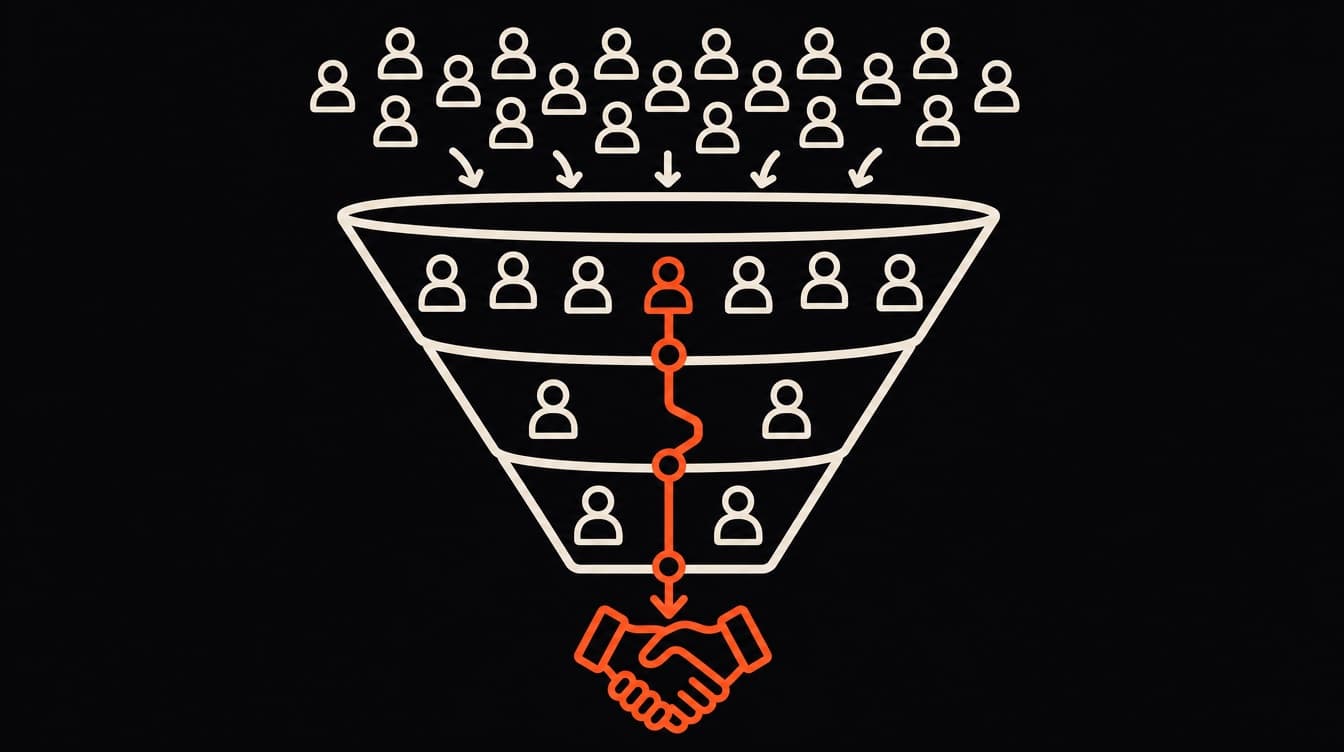
One offer per level of intent
A visitor who found you five minutes ago will not book a sales call, and a visitor who has been comparing agencies for two weeks does not want another newsletter. The fix is to ladder your offers: something free and instant for the curious (an audit, a checklist, a teardown), a low-pressure conversation for the warm, and a direct 'start my project' path for the decided. Each rung captures leads the others would lose.
The best lead magnet is not a bribe — it is a free sample of the exact work you want to be hired for.
Reduce friction before you add persuasion
- Ask for the minimum first — a URL and an email can start the relationship; the rest can come after.
- Deliver value immediately and automatically, so the lead's first experience of you is speed.
- Make the next step explicit on every page: a page without a call to action is a dead end.
- Answer the awkward questions (price, timeline, ownership) before the visitor has to ask.
Follow-up is part of the website
A captured email that nobody answers is a lead you paid for and then ignored. The handoff — instant confirmation, a useful deliverable, a human reply within a business day — is as much a part of your website as the hero headline. Design the whole loop, not just the form.
This is exactly how we build: our own free audit works this way, and we wire the same machinery into every client site. If your site describes your business but does not capture leads for it, that is the first thing worth fixing.